HEALTH & WELLNESS

Signs Your Bird May Be Sick
Birds are experts at hiding signs of illness. In the wild, appearing weak can make them vulnerable, so many companion birds will instinctively act normal even when they aren’t feeling well.

Because of this, even small changes in your bird’s behavior, appetite, droppings, breathing, or appearance can be important. You know your bird’s normal better than anyone—if something seems “off,” pay attention.

Little Loud Soul Bird Rescue • Education Library

Pexels Rrodriguesim 36964369 Scaled

Changes in Behavior

Watch for changes such as:

  • Sleeping more than usual
  • Being unusually quiet or less vocal
  • Sitting fluffed up for long periods
  • Spending more time on the cage floor
  • Less interest in toys, people, or normal activities
  • Weakness, wobbling, falling, or difficulty perching
  • Keeping the eyes partially closed during the day

Changes In Eating or Drinking

Contact your avian veterinarian if you notice:

  • Eating less or refusing favorite foods
  • Suddenly dropping food or having trouble eating
  • Drinking significantly more or less than normal
  • Regurgitation that seems unusual or excessive
  • Vomiting
  • Difficulty swallowing
  • Unexplained weight loss

Breathing Changes

Breathing problems should always be taken seriously.

Warning signs include:

  • Tail bobbing while breathing
  • Open-mouth breathing
  • Wheezing, clicking, or unusual breathing sounds
  • Noticeable effort with each breath
  • Rapid breathing while resting
  • Discharge around the nostrils
  • Frequent sneezing accompanied by other symptoms
  • Voice changes or suddenly sounding hoarse

Changes in Appearance

Look for:

  • Feathers remaining puffed or fluffed
  • Poor feather condition
  • Unusual feather loss
  • Swelling anywhere on the body
  • Crust or discharge around the eyes or nostrils
  • Red, swollen, or irritated eyes
  • Changes to the beak or nails
  • A swollen abdomen
  • Sores, wounds, or unexplained bleeding
  • Changes in the color or appearance of the feet, beak, skin, or mouth


F10750523bfa55592ebfe07fdf04e1c3

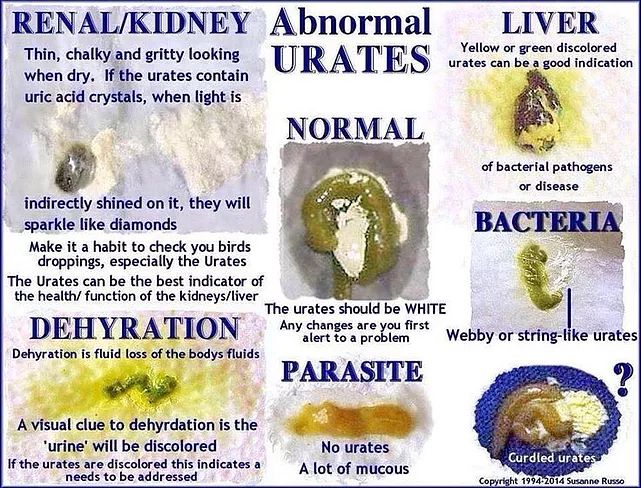
Changes in Droppings

An occasional unusual dropping can happen because of food, stress, or increased water intake. Repeated or persistent changes are more concerning.

Watch for:

  • A major increase or decrease in the number of droppings
  • Very watery droppings that continue
  • Significant changes in color without a dietary explanation
  • Blood or black, tar-like droppings
  • Undigested food in the droppings
  • Straining to pass droppings
  • Little or no stool being produced

Should I Wait and See?

When it comes to birds, waiting can be risky.

You do not need to wait until your bird looks severely ill before calling your veterinarian. If something has changed and you are concerned, contact an avian veterinarian and explain what you are seeing.

If possible, write down when the symptoms started, take photos of unusual droppings, record a video of unusual behavior or breathing, and get a current weight in grams. This information can be very helpful to your veterinarian.


When Is It an Emergency?

Seek veterinary care immediately if your bird is:

  • Struggling to breathe or breathing with an open mouth
  • Bleeding heavily or bleeding that will not stop
  • Unable to stand or perch
  • Having seizures
  • Extremely weak or unresponsive
  • Suddenly losing balance or showing severe neurological symptoms
  • Vomiting repeatedly
  • Suspected of ingesting something toxic
  • Injured by another animal
  • Experiencing possible egg binding
  • Prolapsing
  • Not eating and becoming increasingly weak

Trust What You Know

Every bird is different. What is normal for one bird may not be normal for another.

Knowing your bird’s normal behavior, weight, appetite, droppings, and activity level makes it much easier to recognize when something has changed.

You are not overreacting by calling your avian veterinarian when something does not seem right. Early veterinary care can make a big difference.

Local Avian Vets

Find an avian veterinarian near you.

Not every veterinarian is trained to treat birds. View our list of trusted avian veterinarians in Northeast Ohio.

Read More →

WHEN IS IT AN EMERGENCY?

Know when your bird needs immediate care.

Some symptoms should never wait. Learn which warning signs mean it is time to seek emergency veterinary care.

Read More →
Educational Disclaimer

The information provided by Little Loud Soul Bird Rescue is intended for general educational purposes and is not a substitute for veterinary care. Every bird is different. Always consult a qualified avian veterinarian regarding your bird’s individual health and nutritional needs.