Common Household Dangers for Birds
HOUSING & SAFETY
Our homes are full of everyday products and situations that can be dangerous to parrots. Birds have extremely sensitive respiratory systems, curious beaks, and a habit of getting into things we never expected them to. Knowing the most common household hazards can help you create a safer environment while still allowing your bird to explore and be part of the family.
Airborne Fumes & Fragrances
A bird’s respiratory system is extremely efficient and sensitive. Fumes that may seem harmless to us can be dangerous to birds.
Avoid using around your bird:
- Candles and wax melts
- Essential oil diffusers
- Plug-in air fresheners
- Aerosol sprays
- Perfumes and heavily scented products
- Smoke and vaping
- Strong cleaning fumes
- Paint and chemical fumes
When using cleaning products, keep your bird away from the area and make sure the room is well ventilated.
Other Pets
Even friendly dogs and cats can seriously injure a bird in seconds. Never rely on how well your pets normally get along. A playful swat, bite, or chase can become an emergency. Birds and other pets should always be carefully supervised when they are together. Any bite or scratch from a cat or dog should be treated as a veterinary emergency, even if the injury looks minor.
Nonstick Cookware & Appliances
One of the most serious household dangers for birds is overheated PTFE and other fluoropolymer nonstick coatings.
When overheated, these coatings can release fumes that can be deadly to birds very quickly.
Nonstick coatings may be found on more than just frying pans. Check:
- Pots and pans
- Air fryers
- Toaster ovens
- Waffle makers
- Griddles
- Space heaters
- Self-cleaning ovens
- Other heated appliances
Do not assume an appliance is bird-safe simply because the cooking surface does not look like a traditional nonstick pan.
Open Water
Birds can drown in surprisingly small amounts of water, especially if they cannot climb back out.
Be cautious around:
- Open toilets
- Bathtubs
- Sinks
- Buckets
- Large pots of water
- Aquariums
- Other open containers
Keep toilet lids closed and never leave your bird unattended around open water.
Toxic Foods & Plants
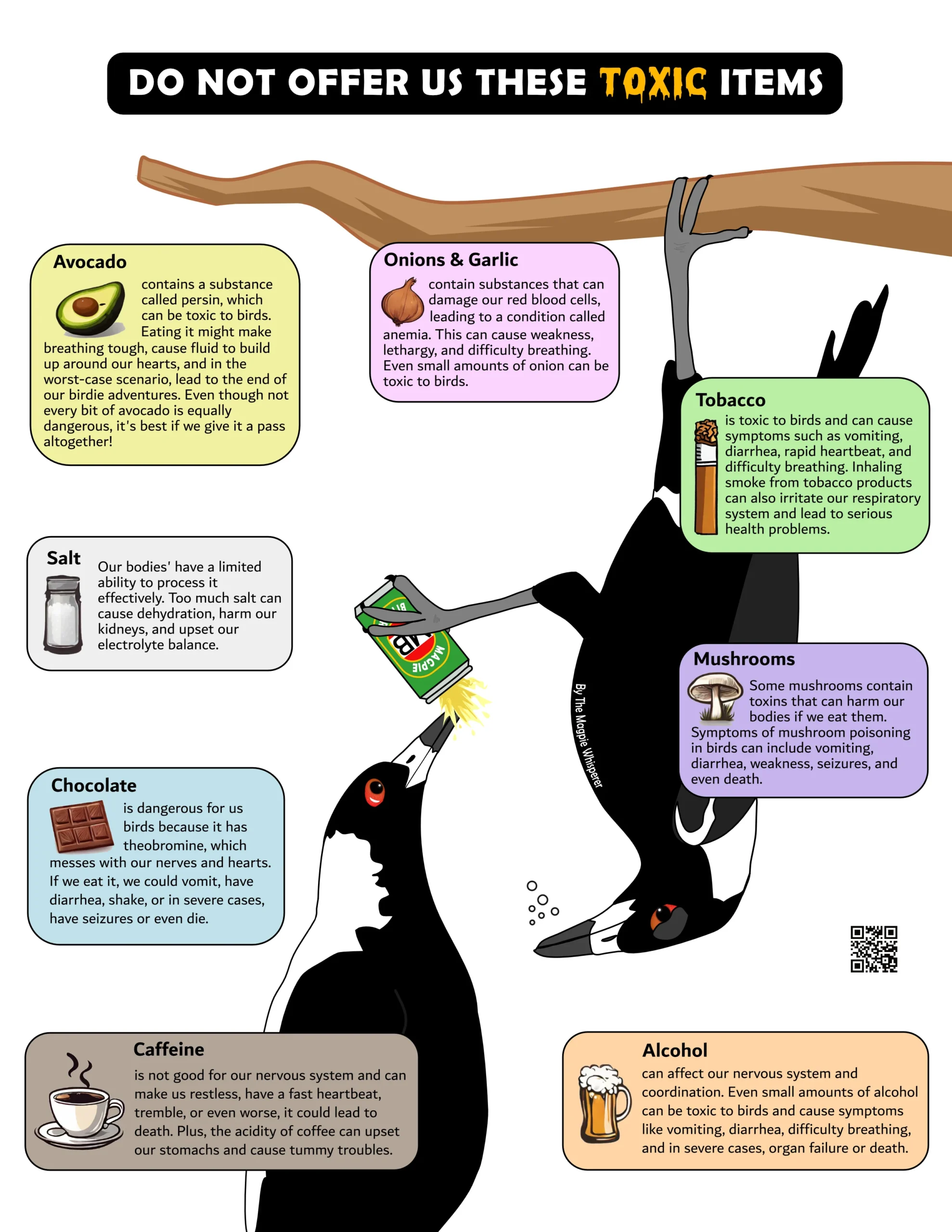
Not everything we eat or grow in our homes is safe for parrots. Foods that should never be offered include:
- Avocado
- Chocolate
- Alcohol
- Caffeine
- Foods containing xylitol
- Very salty foods
Many common houseplants can also be toxic. Always identify a plant and confirm that it is bird-safe before allowing your bird access to it.
Windows, Doors & Fans
A flighted bird can reach a dangerous area in seconds.
Before allowing your bird out:
- Close exterior doors
- Secure windows and screens
- Turn off ceiling fans
- Make sure everyone in the home knows the bird is out
- Watch doors when people enter or leave
Windows and mirrors can also be difficult for birds to recognize as solid surfaces. Help your bird learn the boundaries of your home and supervise them while they explore.
Heavy Metals
Parrots explore with their beaks, which makes metal exposure an important concern.
Lead, zinc, and other unsafe metals may be found in:
- Old cages
- Hardware
- Jewelry
- Bells
- Keys
- Coins
- Paint
- Stained glass
- Metal toy parts
- Household objects
Only use cages, toys, and hardware made from materials appropriate for birds.
Electrical Cords & Small Objects
A curious parrot can chew through an electrical cord surprisingly quickly. Keep cords protected and inaccessible whenever possible. Also watch for small objects your bird may chew or swallow, including jewelry, medication, batteries, screws, pieces of plastic, and other household items.
The Kitchen Is a High-Risk Area
The kitchen combines many potential hazards in one place, including hot surfaces, boiling liquids, sharp objects, food hazards, fumes, and cooking appliances.
For most homes, the safest option is to keep birds out of the kitchen while cooking.
Supervision Is Your Best Safety Tool
Parrots are curious, fast, and extremely good at finding the one thing you forgot to bird-proof. Before letting your bird explore, look around the room from their perspective. Ask yourself what they could chew, climb onto, knock over, swallow, fall into, or escape through.
A bird-safe home does not mean removing every bit of fun. It means creating an environment where your bird can safely explore, play, and be part of the family.
Educational Disclaimer
The information provided by Little Loud Soul Bird Rescue is intended for general educational purposes and is not a substitute for veterinary care. Every bird is different. Always consult a qualified avian veterinarian regarding your bird’s individual health and nutritional needs.