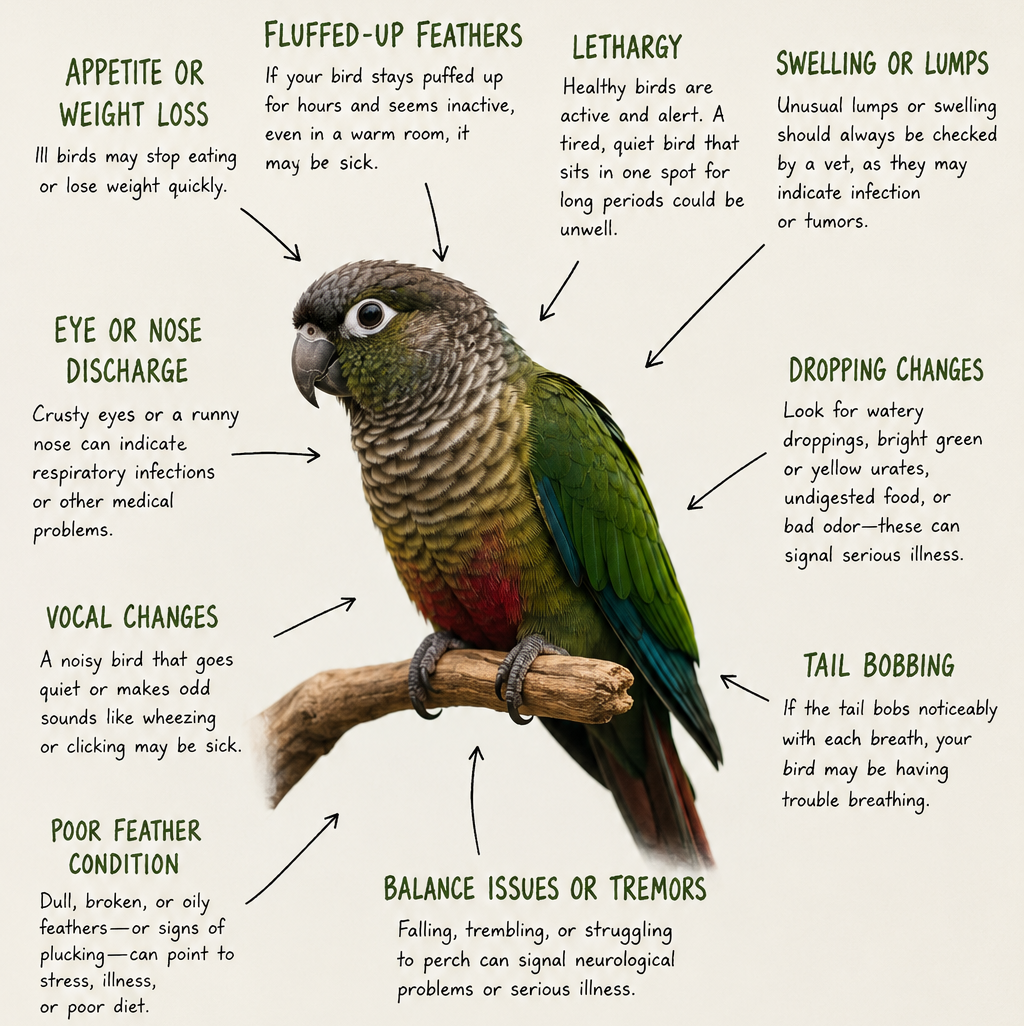
Birds are very good at hiding illness, so when they begin showing obvious symptoms, they may already be seriously sick. Sudden changes in breathing, balance, behavior, appetite, droppings, or ability to perch should always be taken seriously.
Seek Emergency Veterinary Care If Your Bird:
Is struggling to breathe, open-mouth breathing, or has significant tail bobbing
Is collapsed, extremely weak, unresponsive, or unable to perch
Has uncontrolled or significant bleeding
Is having a seizure
Suddenly loses balance, develops a severe head tilt, or cannot stand
May have been exposed to Teflon/PTFE fumes, smoke, toxic chemicals, or another poison
Was attacked or bitten by a cat, dog, or other animal
Has suffered significant trauma, such as being stepped on, crushed, or hit by something
Is repeatedly straining or you suspect egg binding
Has a prolapse or tissue coming from the vent
Is repeatedly vomiting and appears ill
Has gone a concerning amount of time without eating or drinking, especially with other symptoms
Shows a sudden, significant change from their normal behavior
🚨 When in doubt, call your avian veterinarian. A phone call is always better than waiting on a true emergency. 🚨
When Should I Be Concerned?
A single unusual dropping isn’t always cause for alarm, especially after a change in food. Repeated or persistent changes are more important to pay attention to.
Contact an avian veterinarian if you notice ongoing diarrhea or unusually watery droppings, blood or black/tarry stool, significant changes in the color of the urates, consistently undigested food, straining to pass droppings, or a noticeable decrease in the number of droppings.
Changes in droppings are especially concerning when they’re accompanied by other signs of illness, such as lethargy, sitting fluffed up, loss of appetite, vomiting, weakness, weight loss, or changes in breathing.
📸 LLS TIP
You know your bird’s normal better than anyone. If something suddenly seems very wrong, don’t wait for every “classic” symptom to appear. With birds, getting veterinary care early can make a huge difference.
When Is It an Emergency?
Find a Trusted Avian Vet
This information is provided for general educational purposes and is not a substitute for veterinary care.